There are people who would still be playing guitar today if they’d known this difference.
Understand what your strings are actually doing to your fingers, and you can design a setup that lets you actually stick with guitar.
String Type Is the First Thing Beginners Should Know
Most guitars sold as “beginner-friendly” at music stores use steel strings. Nearly every acoustic and electric guitar out there falls into that category. But for beginners specifically, nylon strings are actually the easier ones to stick with. That mismatch quietly causes a lot of people to give up.
Most people who say “my fingers hurt too much, so I quit guitar” hit that wall on a steel-string guitar.
Without ever knowing nylon strings existed as an option, they conclude “guitar just isn’t for me.” This article exists to make that structure clear.
This isn’t “you shouldn’t play steel strings.”
The premise here is simply: this is information beginners deserve to have before deciding whether guitar is for them.
Understanding the Physical Difference
Material and Stiffness
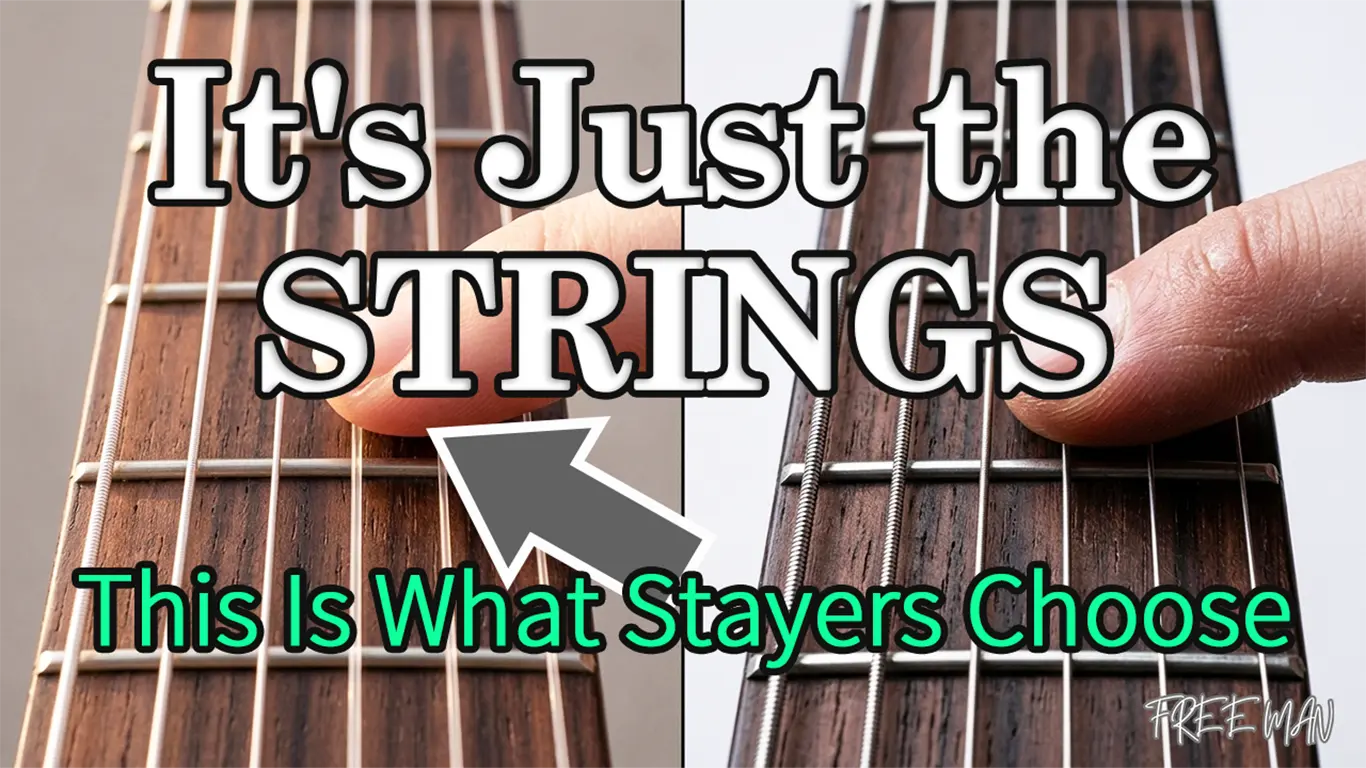
Steel strings are, literally, made of metal. Because the material itself is stiff, it takes real force from your fingertip to press it down to the fret. On top of that, the strings are thin, so the contact area is small and all that pressure concentrates on a single point. That concentrated pressure is what damages a beginner’s fingertips.
Nylon strings are made from synthetic fiber and are noticeably softer as a material. Press down with the same amount of force, and the contact area is wider, so the pressure on your fingertip spreads out. The feel of pressing down is completely different, and the damage from the same motion is dramatically lower. That material difference shows up directly in how your fingers feel the next day.
String Tension
Steel strings are set at a higher tension than nylon strings. It takes more force to press them down to the fret, and for a beginner without much grip or fingertip strength yet, your fingers hit their limit before you’ve even produced a clean note.
Push through that on sheer willpower, and you risk building up strain not just in your fingertips but in the tendons too.
Nylon strings are set at a lower tension, so it takes less force to produce sound. A beginner whose fingertip strength hasn’t developed yet has a real shot at making clean sound on day one. That experience of “I can actually make it sound right” is what fuels the motivation to practice again tomorrow.
The Real Impact on Whether You Keep Practicing
What Actually Happens With Steel Strings, Day by Day
- Day 1: String marks are left on your fingers. It hurts every time you press down. You push through and practice anyway.
- Day 2: Your fingertips turn red and hurt just to touch. You cut practice short.
- Day 3: The pain hasn’t gone away, so you take the day off.
- Days 4–7: “I’ll start again once it’s healed a bit” — you start putting it off.
- 2 weeks later: You can’t bring yourself to pick it up.
- 1 month later: You land on “I guess guitar just wasn’t for me.”
An enormous number of beginners drop off exactly this way.
The problem was never weak willpower. Practicing through pain is, functionally, building up negative associations with the guitar one session at a time. That buildup is what causes people to quit.
What Actually Happens With Nylon Strings, Day by Day
- Day 1: Pressing the strings feels a little unfamiliar, but there’s little pain. You get to experience actually making sound.
- Day 2: You can practice the same way again. Your fingers start adjusting little by little.
- 1 week later: Your fingertips have adapted to the strings, and the unfamiliar feeling has faded.
- 1 month later: You barely notice any pain anymore. Your fingertips have toughened up slightly, and your pressure control feels more consistent.
This is a best-case picture, but low-pain practice genuinely lowers the barrier to doing it again tomorrow.
Keep going, and your fingers adapt. As they adapt, it gets even easier to keep going. That positive cycle is what actually builds long-term consistency.
To help you stick with guitar and actually improve, we’re giving away a free PDF practice blueprint that works in 15 minutes a day.
Just your email address — unsubscribe anytime.
Tone Differences and Which Styles Suit Each
Steel String Tone
Steel strings are known for a bright, clearly defined sound.
The attack is fast, which suits rhythm playing and strummed chords well.
They’re the standard choice across pop, rock, folk, and country. The volume is also higher, giving them real presence inside a full band mix.
Nylon String Tone
Nylon strings are known for a warm, soft sound.
The notes ring out longer, which suits playing that lets a melody line sing.
Beyond classical music, they work naturally across bossa nova, flamenco, solo guitar arrangements, and singing along with your own playing. Even in a quiet nighttime practice session, headphones deliver a genuinely rich musical experience.
Neither is objectively “better” — the right choice depends on the kind of music you’re going for and the environment you’ll be practicing in.
The sound you want and the style you want to play are always personal, which is exactly what makes this choice hard.
Whatever you land on, look for ways to minimize the strain on your fingers early on.
Why Classical + Silent Guitar Is the Best Combo for Beginners
A classical-style silent guitar, built around nylon strings, gives you:
- Much less finger pain
- Low volume
- The ability to play at night
— solving all three of the biggest beginner obstacles at the same time.
For anyone who’s already quit once because of a steel-string guitar, this isn’t just another instrument option. It’s one way of designing a fresh start that removes the root cause of what made you quit in the first place.
The Takeaway: If Strings Were the Reason You Quit, You Can Change It Today
A past attempt derailed by steel strings can absolutely be overwritten by trying again on nylon.
When I first started out on an electric-acoustic, I was fighting finger pain the whole time — but I still remember, vividly, finally getting past the F chord on a classical guitar.
Realizing “the reason I couldn’t stick with it might be the tool, not me” is the first step.
The reason you couldn’t keep playing guitar may never have been talent. It may have simply been how stiff the strings were.