

1. General Guitar Practice Questions
Sheet Music & Musical Expression
- Can I develop musical expression using only tab notation?
-
Yes, you can.
Even with tab, you can build the basic expressive skills you need to play — tone, touch, volume, and how you shape a melody.There are two key points for expression:
- Right-hand tone control
- Fingering suited to the guitar’s characteristics
Stabilize the bass with Thumb (p), and play the melody with Ring (a) or Middle (m).
By shaping these right-hand roles, your range of expression — tone, volume, how a melody sings — gradually widens.In the early stages, you don’t need to fully understand complex chord progressions or music theory.
What matters first is being conscious of the designed fingering and the role of each right-hand finger as you play.Fingering in solo guitar matters more than most people realize.
It shapes the flow of a performance, the tone, the phrasing, and ultimately the range of your expression. - What are the benefits of being able to read sheet music?
-
It lets you understand the structure of a piece visually, in three dimensions.
Specifically, this brings a few advantages:
- Easier to understand musical structure and harmony
Seeing how notes are placed makes it easier to visually grasp the movement of each voice — melody, bass, inner voices — and how the harmony shifts. Fingering and other information shown on the score also helps you understand the piece’s structure and performance intent more deeply. - You can choose fingering suited to you
Being able to read music means you’re no longer limited to the fingering that’s given — you can work out fingering that fits your own hands. You can pursue your own expression, weighing not just playability but tone, phrasing, and how the voices connect. - You can expand your repertoire
You gain access to classical masterpieces and original editions that don’t come with tab. You can read the music directly and take on pieces you’ve never encountered before.
That said, reading sheet music doesn’t need to become a goal in itself.
Build the technique you need to play first, and let your reading ability grow alongside it, as needed.
That approach builds reading skills that actually connect to real playing, far more efficiently.You don’t need to decode every single note from the start. Begin by paying attention to note length and the fingering instructions.
- Easier to understand musical structure and harmony
- I struggle with memorization. How should I practice?
-
People who struggle with memorization often practice by staring at the sheet music, trying to “memorize” it.
But trying to memorize purely in your head tends to stick far less than you’d expect.
What works is repeating the same motion with fixed, consistent fingering.
Once your hands and fingers settle into a consistent shape, the sound and the physical motion become linked, and you move closer to playing without needing to look at the score.
If you play with different fingering each time, on the other hand, your physical motion never stabilizes, and it becomes harder to hold onto a memorized piece.
Rather than consciously trying to “memorize,” start by prioritizing repetition with fixed, consistent fingering.
Freeman 365 | Classical Guitar B… Guitar Memorization: A Complete Guide to Tips and Methods Guitar memorization is a procedure, not rote effort. Learn three tests (Point A–C) to read the structure, play from finger memory, and start from the middle.

2. Practice Methods
For Those With the Free “The 15-Minute Blueprint”
- What exactly do I do during the first 4-minute “reset”?
-
The 4-minute reset is built from the following fixed menu:
- Tuning: 1 minute
- Warm-up: 3 minutes (first half: arpeggios / second half: melody)
Follow the specified fingering and right-hand instructions exactly as given. The purpose of these 4 minutes is to bring your hands and fingers back into a state that’s ready for that day’s practice. In this short window, you check your right-hand nail condition and prepare your fingers by releasing tension.
- The chord used in the tuning section is chosen because its overtones ring clearly, making pitch easy to check.
- During the melody warm-up in the second half, using apoyando (rest stroke) — with the a finger on the first pass and the m finger on the repeat — makes the melody stand out even more effectively.
For Those With the Free “The F-Chord Algorithm”
- Do I need to keep to 120 BPM?
-
No, tempo isn’t what matters.
What matters is playing at a tempo you can control yourself, without tension, and without hesitation. - There are three points, A through C — how should I use them?
-
First of all, you don’t need to force your way through the entire piece.
The goal is clearing the F chord in a solo guitar context.
Work through Point A → B → C in order, and check where you stumble. Aim to eventually play through each point without hesitation.Looping back to measure 19 lets you keep playing continuously without stopping the piece.
For Those Who Own “The Scoreless Blueprint”
- What should I pay attention to while playing?
-
Make sure the melody line rings out fully, without dropping a single note.
One to three voices appear throughout, but they all move within the flow of the harmony. Even where it would be easy to just strike them as a chord, try to play every note as part of that harmonic flow instead.
Even played slowly, adding a bass note to this melody is enough for it to function as solo guitar.
That’s exactly how it’s designed to work.
For Those Who Own “The Memorization Algorithm”
- Chord theory is hard for me. Can I still memorize a piece if I understand its structure through note patterns and finger shapes?
-
Yes, you can. You don’t need to memorize chord names or complex theory.
The key to memorizing smoothly is to use the bass note your left hand presses as your reference point (axis), and to see everything from there as finger shapes and note patterns (forms).When you stay aware of that reference finger position, your hand and body naturally retain the pattern as motor memory.
- The second half feels different in mood. Does the key change?
-
Yes. The piece moves from Em (E minor) to Gmaj (G major), its relative key, which shares the same key signature.
A shift to the relative key sounds very natural to both listener and player, and it creates a transition that settles easily into your body. Enjoy the change in color as you play on. - Is there a way to decide on right-hand fingering (p, i, m, a) so I can play fluidly?
-
There is no single absolute right answer for right-hand patterns. Searching for the pattern that feels most natural and sounds best to you is itself part of developing your expression.
If you’re unsure how to build one, try these two hints:
- Try a pattern. For example, play the second note in each measure with (p), as in “ppimim.”
- Fix the melody finger. Decide whether the melody note you want to bring out is played with the (m) finger or the (a) finger, and build the rest around that.
Use these two points as a base, and build the pattern you can control most smoothly.
3. Plans & Purchasing
- What’s the difference between the Ume, Take, and Matsu plans?
-
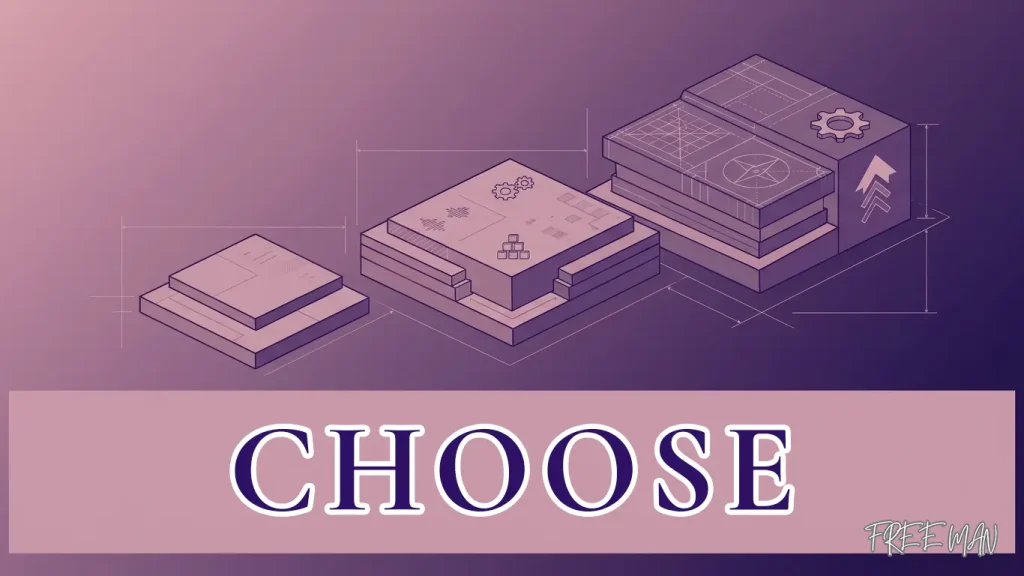
The three plans differ in the number of pieces included and the range of phases they cover.
- Ume Plan: 7 pieces focused on right-hand fundamentals
- Take Plan: 8 pieces focused on integrating expression
- Matsu Plan: All 30 pieces plus the complete roadmap — the most comprehensive option, designed as one continuous path from fundamentals through advanced technique
- Which plan should I start with?
-
If you want to try the fundamentals first, start with the Ume Plan. If you’d rather follow one continuous roadmap from beginning to end without stopping partway, the Matsu Plan is the better fit. Since the gap between the Take and Matsu plans is relatively small, the Matsu Plan tends to be the more practical choice for anyone who ultimately wants to work through the full repertoire.
For a closer look at the differences between plans, see here as well.
Read the article (kit.com)
4. For Matsu Plan Roadmap Holders
About Performance Videos
- Where can I watch performance videos of each piece?
-
We’ve put together a dedicated Matsu Plan performance video playlist, where you can watch every piece included in the Matsu Plan in the same order as the course content.
You can find the performance video for each piece through the links below.
Bookmarking the links above makes it easier to come back and watch smoothly next time.
Progress & Passing Criteria
- Is it okay to move to the next step even if I’m slower than the demonstration?
-
Yes. That understanding is correct.
At the practice stage, you don’t need to prioritize matching the demonstration’s speed.
As a tempo-based passing standard, use:
“Playing at a tempo you can control yourself, without tension, and without stopping or breaking down partway through.”
Use that as your benchmark.
Rather than judging yourself purely on speed, what matters is building a state you can control before moving forward.
Meeting this standard before advancing lets you build stable technique, more reliably than forcing your speed up prematurely.
Other Frequently Asked Questions
About the Freeman Guitar System (Email Sequence)
- I re-registered with an email address I’d used before, but the emails still aren’t arriving. What should I do?
-
If you sign up again through the form using an email address you’ve already registered with before, our system’s duplicate-prevention feature is built to keep the email sequence from restarting.
Sorry for the hassle — please let us know that the emails haven’t arrived, either through the contact form or by replying to an email you did receive.
※When you do, please include the email address you used to register.Once we’ve checked on your account, we’ll restart the email delivery for you.