
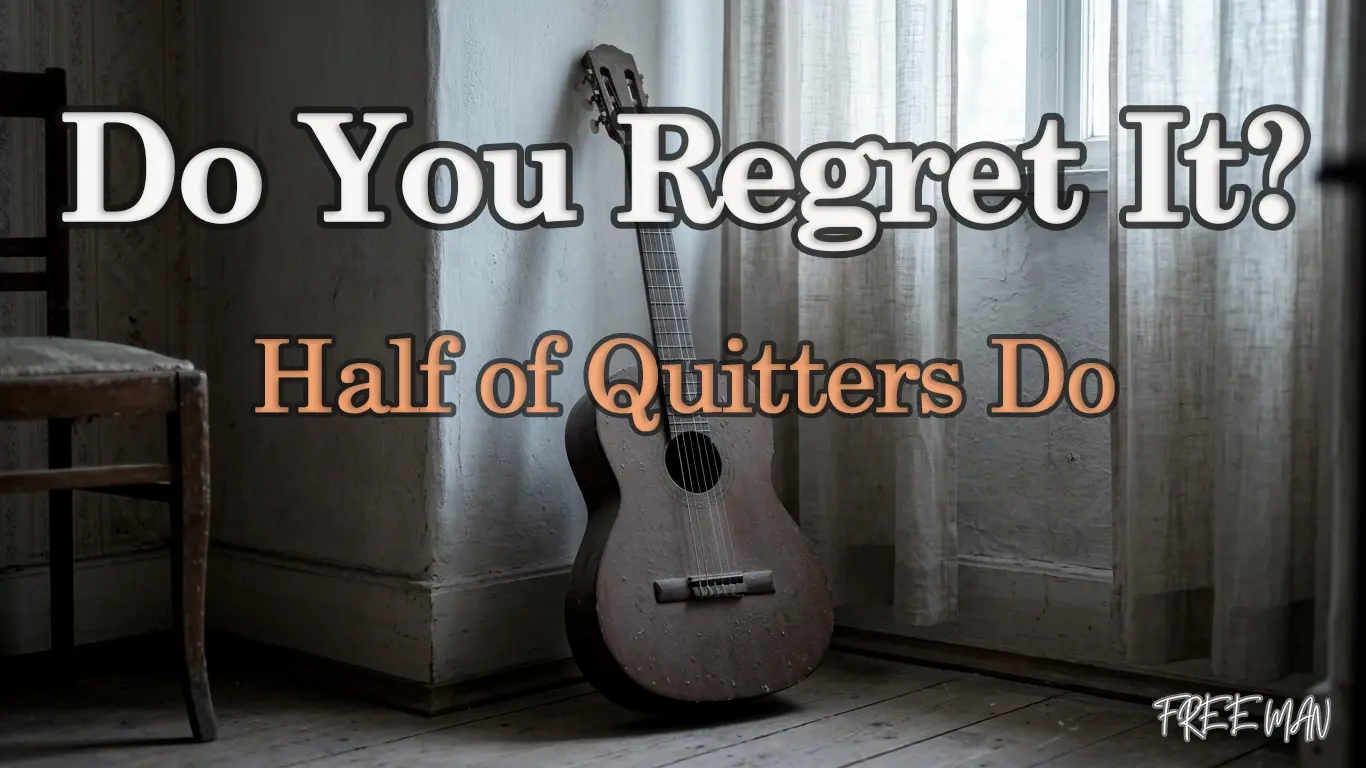
The most common thing people who regret quitting say is: “I wish I’d just kept going a little longer.”
Almost No One Knows What’s Left Behind After Quitting
According to research, more than half of people who quit guitar say they regret it. That number tells you something important: no matter how justified the reason for quitting felt at the time, the feeling that remains once time has passed is a different thing entirely.
Breaking Down What That Regret Actually Looks Like
Regret 1: “I Was So Close”
With guitar, there’s often a moment where everything suddenly clicks. You’ve been repeating the same thing every day, and then one day your fingers just move, the notes connect. People who quit right before that moment never get to experience it — full stop. Most of this regret shows up as some version of “I wish I’d just gone a little further.”
Regret 2: Never Feeling Like the Time Was Worth It
After quitting, some people look back on the time they spent practicing and feel like it was wasted. People who kept going look at that same stretch of time and feel like “everything I have now is built on that.” Whether you quit or not is what changes the meaning of the exact same hours.
Regret 3: Giving Up Time That Was Truly Theirs
The older you get, the more valuable a hobby you can fully enjoy alone becomes. No physical demands, no location requirements, just time you can lose yourself in on your own. Guitar meets every one of those conditions perfectly. The reason so many people who quit later feel “I shouldn’t have let that go” is simply that they realized its value too late.
What Happens to People Who Regret Quitting
Most people who feel this regret are thinking about starting again, but haven’t actually moved. They’re carrying a “someday I want to play again” feeling, with time passing and no clear trigger to act on it. The guitar might still be somewhere in the house — or it might already be gone.
Either way, starting again is always technically possible. Once your body has learned a feeling, it comes back faster than you’d expect, even after a long gap.
Get a free PDF practice blueprint that actually works in 15 minutes a day.
Just your email address — unsubscribe anytime.
The One Condition That Prevents Regret
Keep going. But that doesn’t mean pressuring yourself with “I have to keep going.” It means setting up an environment and conditions you can actually sustain, from the start. The noise problem, the finger pain problem, the time problem — solve those, and most of the reasons people quit simply disappear.
You can make the choice today that keeps you from ever having to say “I wish I’d kept going a little longer” down the road.
The Takeaway: Regret Is Preventable
The regret that comes after quitting can be prevented by how you set things up after you start. Motivation, environment, and the right instrument — get all three in place, and your odds of regret drop sharply. In the next article, we’ll bring all three together into a single framework.