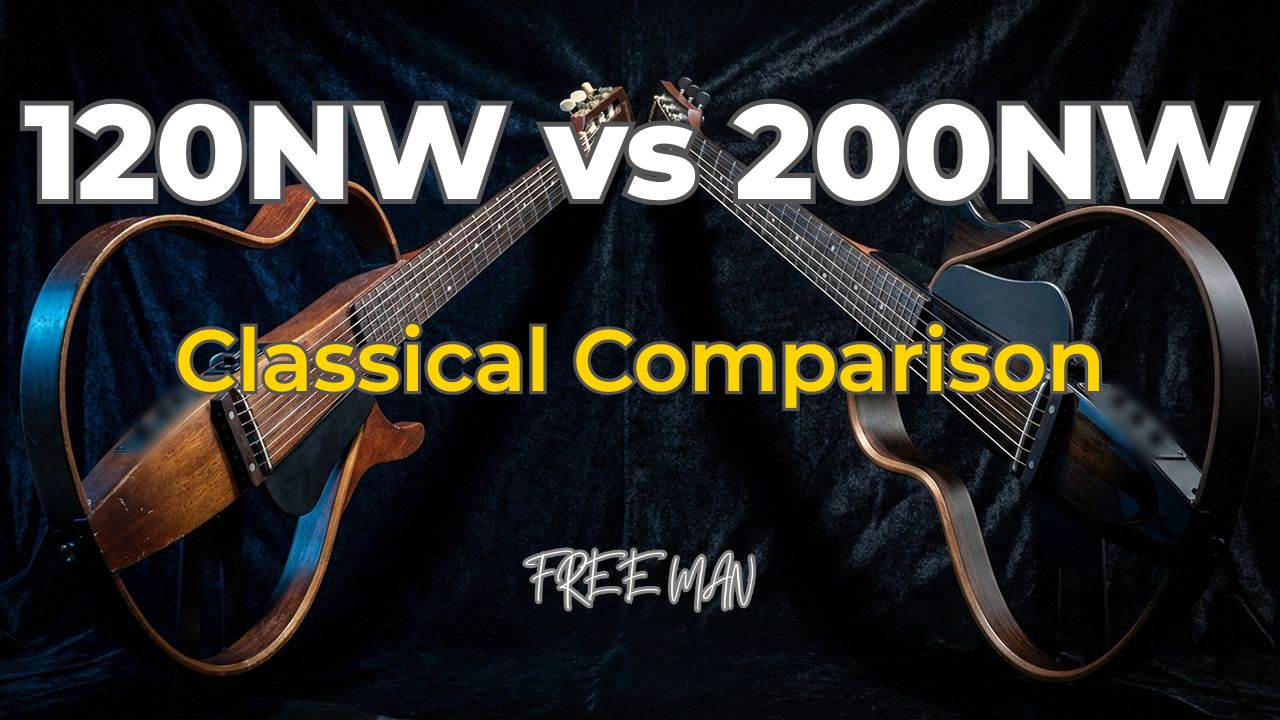
If you’re deciding between the Yamaha SLG120NW and SLG200NW, you’re likely asking one key question:
Which one is better for classical guitar performance?
Both models are part of Yamaha’s Silent Guitar lineup, but they feel and respond differently—especially from a classical technique perspective.
This in-depth comparison focuses on:
- Sustain and tonal decay
- Apoyando (rest stroke) response
- Tremolo clarity
- String tension feel
- Line output and recording usability
This is not a specification comparison.
This is about musical control, expressive nuance, and long-term technical development.
Final Verdict (Quick Answer)
- Best overall versatility → SLG200NW
- Best for expressive tonal shaping → SLG120NW
The SLG200NW is the more modern and refined instrument.
However, the SLG120NW still offers a unique depth of sustain and organic response that many classical players may prefer.
Now let’s break down the differences in detail.
Evaluation Context
This comparison is based on:
- 20 years of active use with the SLG120NW
- Direct hands-on testing of the SLG200NW
- Primary use: classical solo repertoire, structured practice, and recording
- Evaluation focused primarily on speaker output tone
The emphasis here is on:
- Expressive control
- Right-hand feedback
- Long-term musical growth
1. Sustain and Natural Decay
SLG120NW
- Longer, more organic sustain
- Rich overtone presence
- Harmonics blend naturally into space
Single notes linger in a way that encourages listening to resonance—an essential skill for classical interpretation.
SLG200NW
- Cleaner, more controlled decay
- Slightly shorter sustain
- Stronger emphasis on initial attack
The decay feels engineered and precise.
This makes it particularly effective for recording situations.
Summary:
The 120NW breathes.
The 200NW behaves.
2. Apoyando (Rest Stroke) Response
SLG120NW
- Softer rebound
- Requires deeper engagement
- Produces a warmer, rounded tone
It does not give away volume easily.
You must engage fully with the string, which can refine right-hand precision over time.
SLG200NW
- Stronger initial punch
- Immediate projection
- Clear and defined output
Even lighter strokes produce noticeable sound.
This helps with dynamic contrast and modern performance contexts.
Summary:
The 120NW develops touch.
The 200NW rewards impact.
3. Tremolo Clarity and Note Separation
SLG120NW
- Notes blend smoothly
- Warm and lyrical
- Cohesive musical flow
Tremolo passages feel continuous and expressive.
SLG200NW
- Clear articulation
- Distinct note separation
- Wide dynamic range
Tremolo passages stand out more clearly in recordings and video performances.
Summary:
The 120NW emphasizes continuity.
The 200NW emphasizes articulation.
4. String Tension Feel
SLG120NW
- Slightly softer feel
- Comfortable for extended sessions
- Encourages a gentler tonal character
SLG200NW
- Slightly firmer tension
- Stronger resistance
- Produces a more focused tonal core
This difference directly affects phrasing control and attack confidence.
5. Line Output and Recording Performance
In this category, the winner is clear.
The SLG200NW performs better for modern use cases.
Why?
- Built-in microphone simulation
- Improved headphone tone
- Stronger integration with recording setups
- More adaptable for content creation
If you regularly record, stream, or produce video content, the SLG200NW is the more practical choice.
Who Should Choose Each Model?
Choose the SLG120NW if you:
- Prioritize natural sustain and resonance
- Practice primarily through speaker output
- Want to refine right-hand control
- Value expressive decay and harmonic bloom
Choose the SLG200NW if you:
- Record or stream frequently
- Practice mostly with headphones
- Prefer strong attack clarity
- Want a polished, modern response
Final Comparison Summary
| Category | Winner |
|---|---|
| Overall Versatility | SLG200NW |
| Sustain & Harmonic Depth | SLG120NW |
| Recording Performance | SLG200NW |
| Expressive Tonal Shaping | SLG120NW |
| Modern Features | SLG200NW |
The real question is not:
Which one is better?
The better question is:
Do you want a finished, refined sound—
or a sound you shape and develop through touch?
Both instruments are capable.
The choice depends on your musical priorities.
Silent Guitar Methodology: A Global Original.
A 30-Year Algorithm, Compressed into 3 Minutes.
A structurally designed 30-piece course system
built to help you perform expressive solo classical guitar as complete works — efficiently and methodically.