Classical guitar is an instrument where,
even if you practice correctly,
you eventually lose sight of what comes next.
- What should I aim for now?
- Where exactly is the “Beyond Intermediate” line?
- Why do I keep playing pieces but feel no real growth?
This page exists to end that confusion.
The Beginner to Beyond Intermediate Course is a 30-piece structured solo guitar course designed to help you reach a level where you can perform calm, expressive classical guitar solos as complete musical works.
This is not a random collection of practice pieces.
Through carefully sequenced repertoire, it integrates sound, rhythm, resonance, and expression, and presents a clear path beyond the intermediate plateau.
The Conclusion of the Beginner – Beyond Intermediate Course
Become an expressive solo classical guitarist through 30 carefully designed pieces.
This is not about quantity.
- No unnecessary pieces
- No overlapping roles
- Every piece placed with intention and order
Once you complete these 30 solo works, you will never return to the state of:
“I don’t know what I should practice anymore.”
How to Use This Beginner – Beyond Intermediate Course
- First, review the overall structure from Category I to V
- Identify where you currently stand
- Visit individual piece pages (Gumroad)
- Listen to the performances on YouTube
- Select only the scores you actually need
Every piece is self-contained.
You can follow the sequence from start to finish,
or selectively pick only what your current level requires.
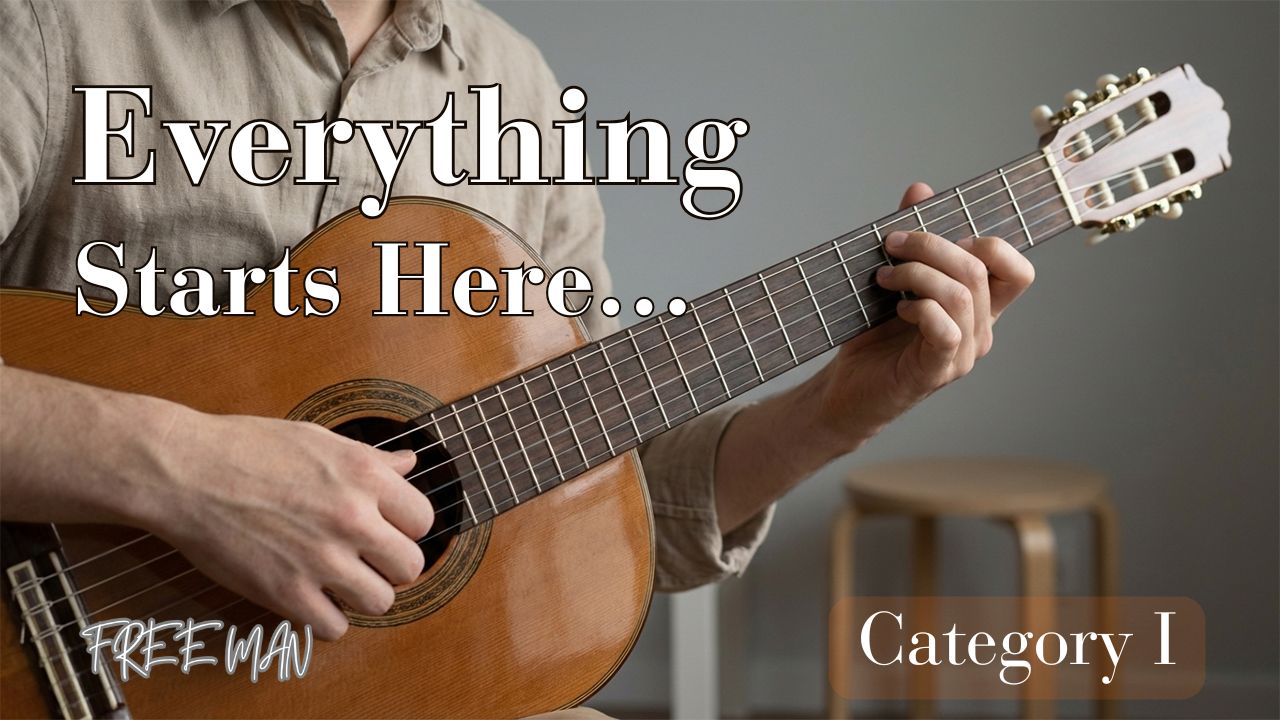
Category I — Developing the Fingers (Introduction & Foundation)
The first thing you must develop in classical guitar is the right hand.
Skip the vague “before you can really play” phase as efficiently as possible.
This category focuses on:
- Functional separation of thumb, i, m, and a
- Finger independence and volume control
- Physical adaptation to the guitar itself
It is fine if this stage feels like pure practice.
The goal is simple:
Create a state where your fingers move without hesitation.
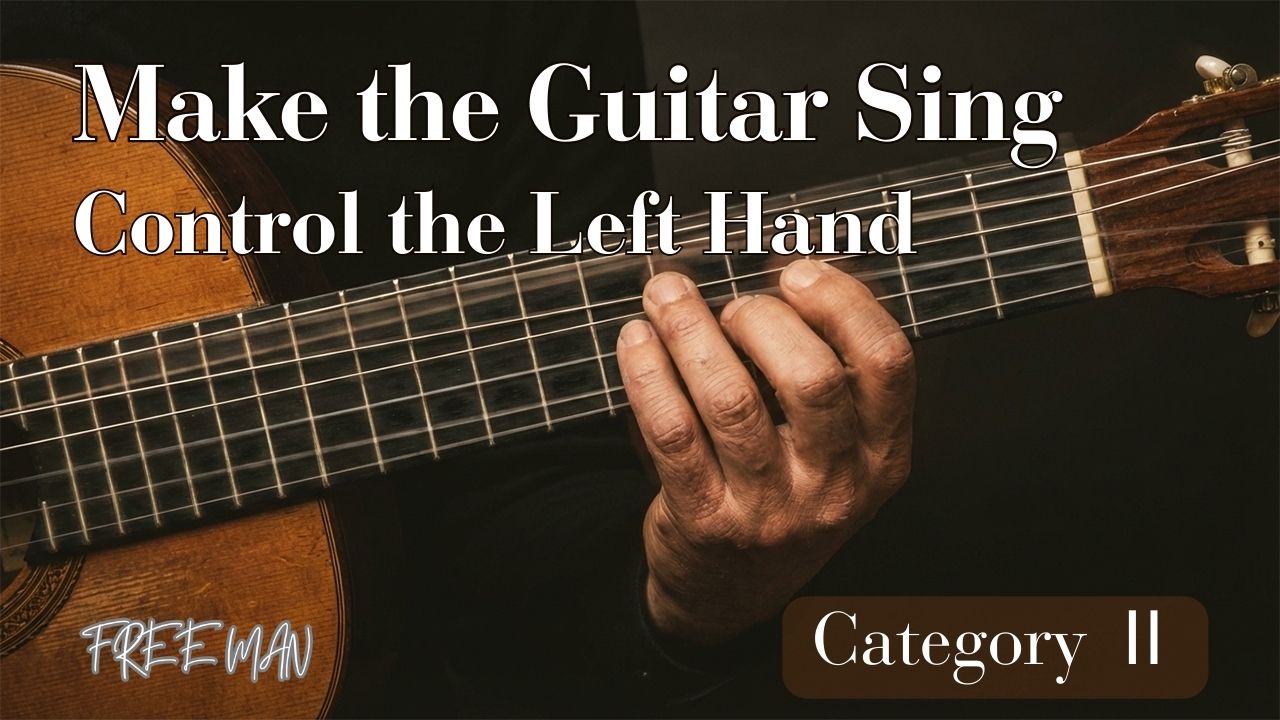
Category II — Playing Phrases (Beyond Intermediate)
This is the biggest wall that stops most intermediate guitarists.
- Notes line up, but music doesn’t emerge
- Speed becomes a substitute for expression
- Pieces collapse before reaching the end
In Category II, you develop:
- Rational left-hand fingering
- Phrase-based musical thinking
- Endurance and stamina
The goal is clear:
“Being able to play a full piece to the end.”
This category exists to make that state reliable.
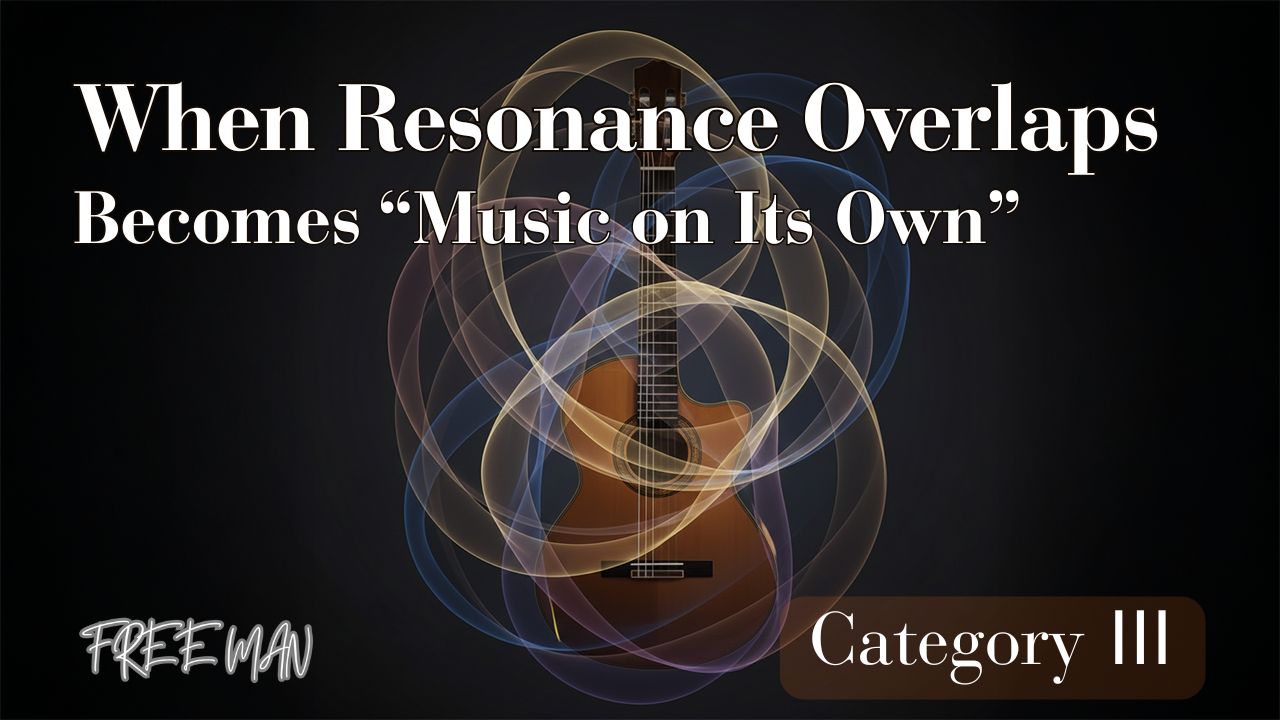
Category III — Creating Resonance (Polyphony & Musicality)
This is where classical guitar truly begins to sound like classical guitar.
You will learn to:
- Sense harmony
- Handle multiple voices simultaneously
- Control overlapping resonance
Even with minor mistakes, your playing will still:
Sound like complete music.
That is the state this category builds.
👉 Category III – Detailed Page
Category IV — Moving the Music Forward (Rhythm & Groove)
Escaping the trap of “correct but boring” guitar playing.
This category develops:
- Off-beat awareness
- Musical propulsion
- Time control through the bass line
Rhythm shifts from something you merely keep
to something you actively move.
The result:
Performances listeners don’t stop halfway through.

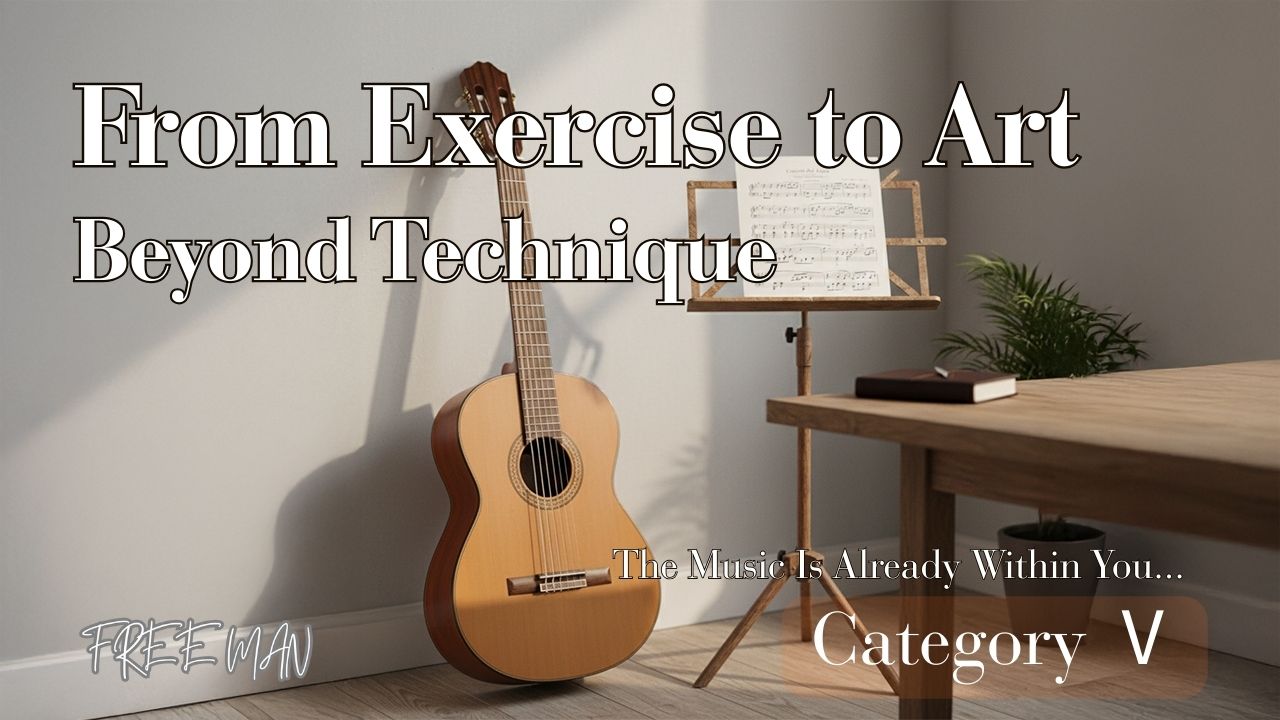
Category V — Completing a Piece as a Work of Art
From here on, this is no longer practice.
You decide everything:
- Tempo flexibility
- Dynamic design
- The use of silence
This is the stage where you:
Take responsibility for musical decisions.
Pieces that pass through this category become:
- Suitable for audiences
- Ready for recording or publishing
- Your personal representative works
All Pieces Are Performed on Silent Guitar
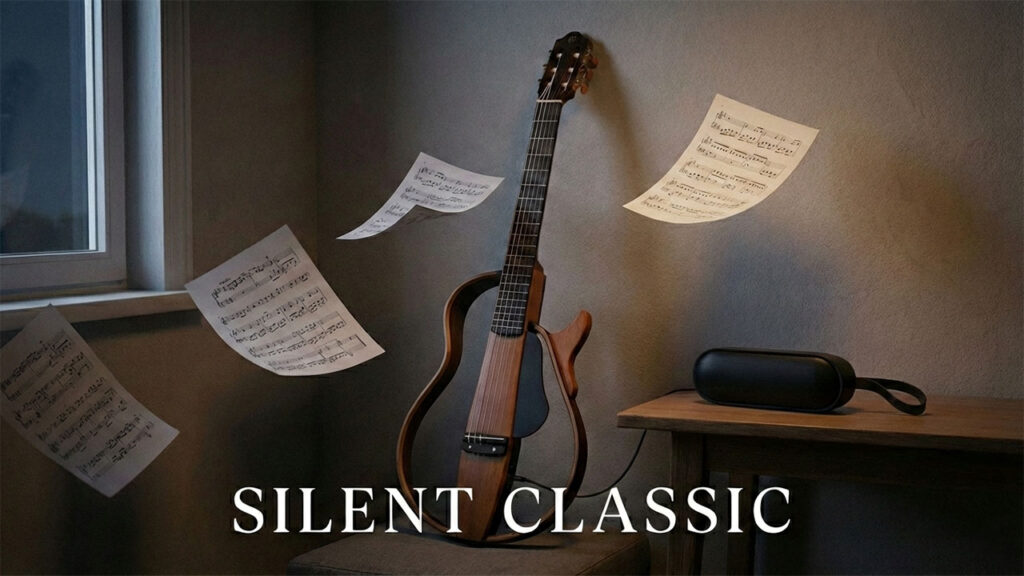
- No concern about volume
- No restriction on practice time
- Maximum focus
This course is optimized for modern practice environments.
Of course,
everything also works perfectly on a traditional classical guitar.
Why Each Piece Works Independently
Every piece includes:
- A clear role
- A defined category
- A specific learning outcome
That’s why you can simply choose:
“The one piece I need right now.”
There is no forced bundle.
Why 30 Solo Guitar Pieces
- Not too few
- Not too many
- Small enough to grasp the whole structure
Thirty pieces is the maximum number that can still be designed with clarity.
Beyond that, the path disappears.
Your Next Step
- Confirm your current category
- Visit an individual piece page
- Listen first, then select the score if needed
By repeating this cycle,
you will progress without hesitation, and without getting lost.
“A 30-Year Algorithm, Compressed into 3 Minutes.”
These scores are the result of three decades of rigorous research across music academies and high-end IT systems. Each piece is an optimized logical structure designed specifically for the silent guitar.
The $100–$200 price range is not for a “song.” It is a strategic investment to acquire a proprietary methodology that cannot be found elsewhere.
Don’t just play the notes. Install the logic.
👉 View All Categories
👉 Download Sheet Music on Gumroad
👉 Watch Full Performance on YouTube